Founder Spotlight: Heidi Prowse, Purpose Media Canberra
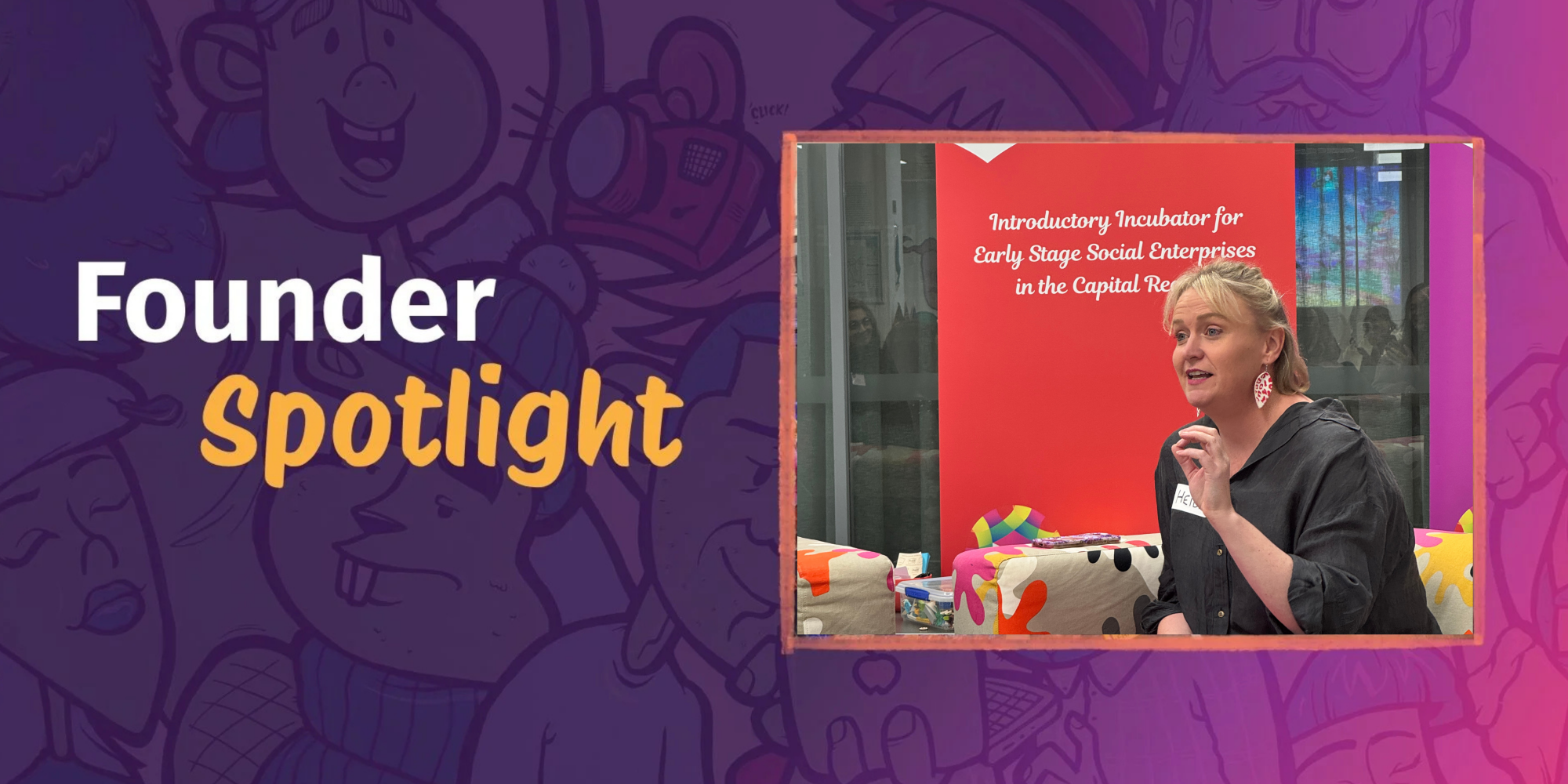
Heidi Prowse OAM knocked on around 3,500 doors during an ACT election campaign. She expected conversations about politics and policy. Again and again, she found herself talking to people who did not know where to find help.
Residents described services they believed did not exist in Canberra. Through years working in the community and not-for-profit sector, Heidi often knew organisations that might be able to help. Sometimes, those organisations were remarkably close to the people who had never heard of them.
The gap stayed with her. A service could be established, doing valuable work and visible to people within the sector, while remaining unfamiliar to the community around it. Knowing where to begin depended on information that was not reaching everyone who needed it.
Those conversations helped spark Purpose Media Canberra, a social enterprise using local storytelling to connect people with their community and make useful information easier to find.
For Heidi, the relationship starts before someone needs support. A story about a local person, a community initiative or something funny happening nearby can give someone a reason to follow along. Over time, she hopes that familiarity will make the platform somewhere people think to turn on a difficult day.
Her example was a wombat trying to break into a food pantry: the sort of story that might make someone smile, follow along and feel more connected to Canberra.
Speaking at The Mill House Ventures’ final Impact After Hours for 2026, Heidi described exploring how journalism and social media could help make those connections. She wanted to amplify the human experiences behind local organisations and give audiences more opportunities to discover the people doing useful work around them.
Purpose Media also works with organisations to strengthen their capability, including strategy, communications, governance and community engagement. Income from that work helps support independent local storytelling and makes useful community information easier to find. The business connects Heidi’s sector experience with her commitment to sharing Canberra’s stories.
Getting there required her to slow down. Heidi is comfortable taking action, and she spoke with humour about the energy people associate with her. Developing Purpose Media meant allowing herself time to understand the problem before settling on what she would build.
As that understanding developed, her explanation of the business changed too. She was still working out which parts of the problem she could address and what value the platform could offer. For someone accustomed to moving quickly, staying with those questions took deliberate effort.
That is a useful lesson for founders who can already picture a finished product: give yourself room to investigate the need. The conversations that complicate your first idea may help you build something more relevant to the people you want to reach.
Another lesson followed when Heidi began explaining Purpose Media to others. She tried to fit the whole business into the conversation: why it existed, what it did, who it helped, the stories it shared and how it earned money. The result could leave people overwhelmed.
She began paying closer attention to what each audience needed to understand. Someone looking for local support needs a useful starting point. An organisation considering working with Purpose Media needs to understand the services and their value. A prospective partner may want a fuller picture of the model.
An exchange with her local rugby league club helped illustrate the difference. Sponsoring the club had been one of Heidi’s first business goals. When the president asked how Purpose Media made money, she explained that her hope for the club’s community was that people would know where to begin when they needed help.
The lesson was to choose a clear starting point for each conversation and allow further questions to follow. Heidi also highlighted the importance of reconsidering sector buzzwords and acronyms. Familiar language inside an organisation can make its work harder to understand from the outside.
For someone building a business around storytelling, Heidi was candid about an unexpected difficulty: telling her own story. She described being able to see what makes another person compelling, draw out their motivation and help others recognise their contribution. Turning that same attention towards herself feels different.
She recalled being told she was a finalist in the Australian of the Year Awards and wondering whether anyone else had applied. Even when others recognised her work, she found it difficult to view her own contribution with the generosity she brought to someone else’s story.
That honesty offered some reassurance for other founders. Being confident in a room does not necessarily make it easy to explain why your own experience matters. Sometimes, another person’s questions can help you notice what you have been overlooking.
Heidi has found that her clearest explanations often emerge in ordinary conversation. Someone asks what she is doing, her enthusiasm takes over, and the words arrive. Trying to recreate that moment deliberately in front of a camera can feel considerably less natural.
One practical approach she shared was asking someone trusted to stand behind the camera and ask questions. Having a familiar person to speak with can make the experience feel conversational. It gives a founder somewhere comfortable to begin when a script or recording feels difficult.
Her belief in asking better questions also shapes the stories Purpose Media tells. Heidi recalled interviewing a Canberra lawyer whose community involvement extended across years of fundraising and support. She wanted to understand the person and motivation behind that contribution.
After the story was published, his wife commented that it had found words she had struggled to find herself. For Heidi, that response captured something she values about the work: helping someone be recognised beyond their professional role, through the reasons they care about their community.
She has learnt to give her own message time to reach people, too. Founders can become tired of explaining their work and feel pressure to constantly find something new to say. Heidi’s advice was to keep communicating a clear central message, using different formats and opportunities to help people encounter it.
She has also worked on how she interprets a declined request. Her competitive streak once made an unsuccessful ask feel like a personal failure. Reframing it as a starting point she could try again from helped her keep going without treating every no as a verdict on the business.
Across these experiences, Heidi’s focus returns to the people at either end of a story: those doing valuable work and those who might benefit from knowing about it. Purpose Media is her way of helping them find one another, while supporting organisations to communicate more clearly themselves.
For other founders, her experience offers a practical invitation to listen closely, simplify the first explanation and let the conversation continue. You do not have to fit the whole business into a single introduction. You do need to give the person listening a clear reason to care.
Explore Purpose Media Canberra at purposemediacbr.au to read local stories, discover community information or find out how Heidi and the team can support your organisation.
Did you miss this great event? Impact After Hours is held every 3rd Thursday of the month.