Building our Founder stories with Folktale
A five-second video of a flag being raised or taken down may seem insignificant.
Yet it can locate a moment in time, show where people gathered and signal that an activity is beginning or ending. A report might record participant numbers. The clip helps us understand what it felt like to be there.
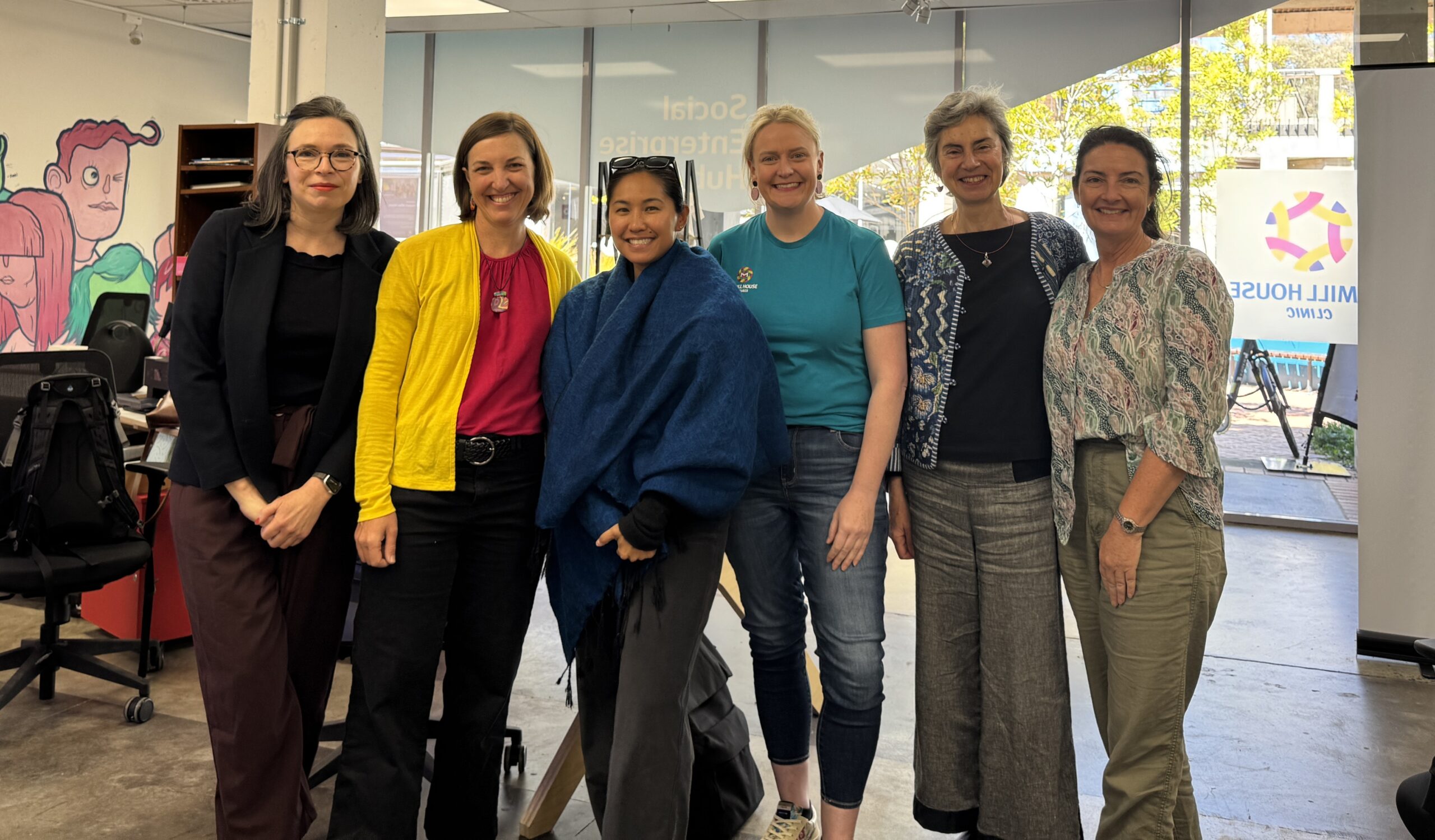
At a recent Mill House Ventures workshop with Folktale, this opened a bigger conversation: how much evidence of impact is created around social enterprises every day but never captured?
The workshop introduced Folktale and launched part of our 10th anniversary project. More importantly, it reminded us that good storytelling is not primarily about polished production. It is about building the habits and systems needed to recognise human evidence while it is happening.
Social enterprises rarely lack powerful stories. We lack time.
When you are delivering programs, generating revenue, supporting people and keeping an organisation sustainable, storytelling can feel less urgent. It is pushed aside until an annual report, funding application or campaign suddenly demands a compelling account of impact.
Then we try to reconstruct months or years of change from memory.
We must also explain complex work in crowded, fast-moving channels before the audience moves on.
Sarah from Folktale acknowledged this tension. Technology can make stories easier to collect, organise and learn from, but it should remain in a supporting role. The real goal is to create a culture in which stories are routinely noticed and valued.
A rough 30-second reflection that captures something true can be more useful than impressive cinematography without a clear purpose.
Ten years of impact, captured by a community
As Mill House Ventures approaches its 10th anniversary, we are collecting stories from alumni, founders, partners and others who have been part of our community.
Together, these reflections can show what ten years of social enterprise development have made possible across Canberra and the surrounding region. They may reveal relationships, challenges and turning points that an institutional timeline would miss.
Mill House alumnus, entrepreneur and musician Ben Drysdale will draw inspiration from the collection to write a song for our anniversary celebration. It is a creative way to bring many voices into a shared account without pretending one organisational voice can tell the whole story.
Start with the “why”
Before choosing a camera angle or drafting an interview question, Sarah encouraged us to begin with the intended outcome.
Why are we telling this story? What should the audience understand, feel or do after experiencing it?
Without that clarity, it is easy to collect attractive content that communicates very little.
One framework explored during the workshop was the “Three Ps”:
- People-based stories centre a person’s experience or journey.
- Place-based stories make the setting a central character.
- Purpose-based stories are driven by action and a clear objective.
We then decide what the audience will be told and what they will be shown.
The “Tell Shots” identify the voices:
- The Heart is the person whose journey carries the story.
- The Helpers add depth, validation or context.
- The Experts contribute lived-experience knowledge, facts or specialist insight.
The “Show Shots” provide the visual ingredients:
- People: faces, interactions and relationships.
- Place: the environments where the work happens.
- Objects: tools and everyday items connected to the activity.
- Time: light, weather, seasons or routines that locate the moment.
Around the room the framework was applied by Founders. For a midwifery enterprise, the mother could be the Heart, the midwives the Helpers and an empty birth suite a meaningful Place. These elements help funders understand something of the experience their support enables.
For a musician, a notebook, pen and musical instruments could appear at home, beside a stream or at a bus stop. The objects provide continuity, while each location adds context to the creative process.
These details are not decoration. They are human evidence.
From scattered stories to story intelligence
Folktale helps organisations connect these human accounts with higher-level reporting.
Organisations can upload existing data and content, identify gaps in their story collection and invite new reflections. Automatic thematic tagging and sentiment analysis can help users identify recurring ideas. Related material can then be assembled into thematic reports and “Supercuts” for different stakeholders.
We asked whether Mill House could upload ten years of existing program videos. Sarah confirmed the archive could be analysed, offering a possible longitudinal view of the experiences, language and priorities captured over time.
That is a useful prompt for any established social enterprise: shared drives, phones and old program folders may already contain valuable qualitative evidence.
Artificial intelligence can assist with organising material and identifying possible patterns, but it does not replace evaluation, context or human judgement. A story alone does not establish causation. Consent, privacy, ownership and appropriate reuse must also be considered before participant material is uploaded or repurposed.
Technology can help us find the threads. People still decide what they mean.
Finding the deeper “why”
Collecting a story is only the first step. The questions we ask determine how much meaning we uncover.
During the workshop, Heidi introduced abstract laddering, a human-centred design method that uses repeated “why” questions to move beyond the first, functional answer.
She shared the example of a volunteer who initially described their role as delivering food relief. By going deeper, they recognised that the meaningful part was the connections formed for people in isolation.
The delivery was the activity. The connection was the story.
This is often where impact becomes visible: when someone feels seen, trusted, included or connected. An outputs report can confirm that a delivery occurred. A human reflection can explain why it mattered.
Founders need Helpers too
Founders are often too close to their work to recognise what is remarkable about it. What feels significant to an outsider can feel ordinary to someone living it every day.
Social entrepreneurs need Helpers too: peers, team members and participants who can listen, notice patterns and ask one more “why”.
Sometimes another person can see the story you are standing too close to recognise.
Start with the first pancake
The workshop ended with a deliberately low-pressure invitation: upload a “first pancake”.
The first pancake is rarely perfect, but it helps you learn what to do next.
For a social enterprise, that first attempt could be a photograph, an old clip, a voice reflection or a simple 30-second video. It does not need studio lighting or a polished script. It needs a clear reason for being captured and appropriate permission from the people involved.
Try this:
- Decide what you want the audience to understand, feel or do.
- Choose whether the story is led by a person, place or purpose.
- Identify the Heart, Helpers and Experts.
- Capture a person, place, object or signal of time.
- Ask “why does that matter?” until you reach the meaning beneath the activity.
Then save it somewhere it can be found, understood and used.
Our 10th anniversary gives Mill House Ventures a reason to look back. The stories can also help us look forward by shaping how we describe our contribution, what we learn from our community and where we focus next.
Here is an opportunity to see Folktale in action. If you have been part of the Mill House story, we invite you to contribute your first pancake to our anniversary collection.
Ten years of impact is not one Mill House story. It is hundreds of human stories.
This is our opportunity to bring them together.